Skip to content

Grammar Fixed

    Grammar Fixed
    • hasn't vs haven't
      Confused Words & Word Choice

      Hasn’t vs Haven’t: What’s the Difference and When to Use Each?

      BySarah Mitchell September 6, 2026September 6, 2026

      Quick Answer The difference between hasn’t and haven’t is simple: the correct choice depends on the subject. For example: The quickest way to decide is to expand the contraction. If has not sounds correct, use hasn’t. If have not sounds correct, use haven’t. Hasn’t vs Haven’t at a Glance Feature Hasn’t Haven’t Full form Has…

      Read More Hasn’t vs Haven’t: What’s the Difference and When to Use Each?Continue

    • fiance vs fiancee
      Confused Words & Word Choice

      Fiancé vs Fiancée: What Is the Difference?

      BySarah Mitchell September 5, 2026September 5, 2026

      Quick Answer Fiancé and fiancée both mean a person who is engaged to be married, but traditionally they differ by gender: The spelling difference is simple: fiancé ends with é, while fiancée ends with ée. So, if you are writing about an engaged woman, the traditional spelling is fiancée. If you are writing about an…

      Read More Fiancé vs Fiancée: What Is the Difference?Continue

    • height vs hight
      Confused Words & Word Choice

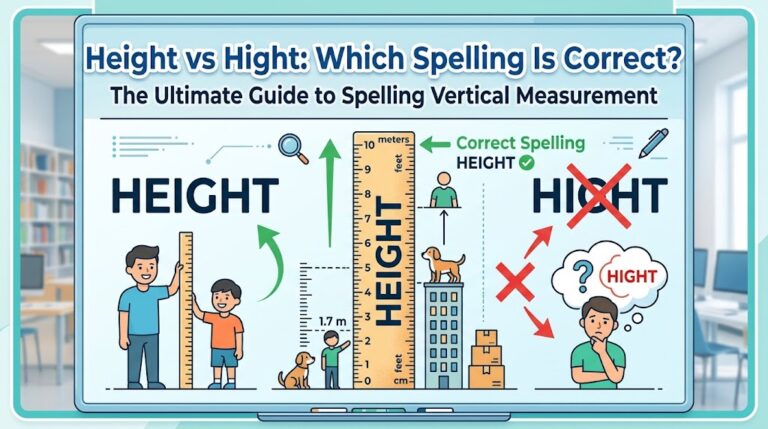
      Height vs Hight: Which Spelling Is Correct?

      BySarah Mitchell September 5, 2026September 5, 2026

      Quick Answer Height is the correct spelling when you mean how tall a person or object is, or the vertical distance from bottom to top. Hight is generally not the standard spelling of the noun used for vertical measurement. It can appear as an archaic or historical English form, and it may also occur as…

      Read More Height vs Hight: Which Spelling Is Correct?Continue

    • wether or weather or whether
      Confused Words & Word Choice

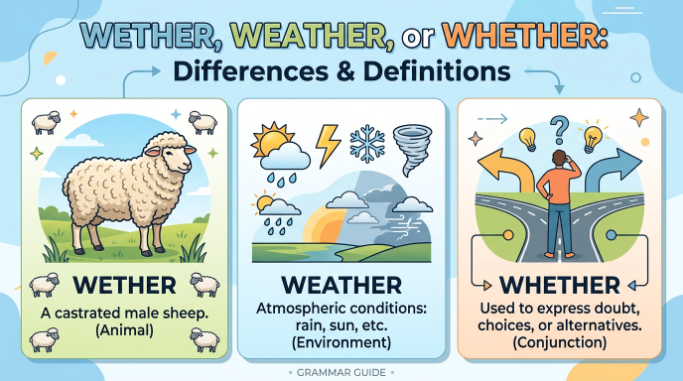
      Wether or Weather or Whether: Meaning, Differences, Spelling, and Examples

      BySarah Mitchell September 5, 2026September 5, 2026

      Quick Answer Weather, whether, and wether are three different English words. So, if you are writing “I don’t know whether it will rain,” the correct word is whether, not weather or wether. If you are talking about rain, sunshine, temperature, storms, or atmospheric conditions, use weather. If you mean a castrated male sheep, use wether….

      Read More Wether or Weather or Whether: Meaning, Differences, Spelling, and ExamplesContinue

    Page navigation

    Previous PagePrevious 1 … 12 13 14

    © 2026 Grammar Fixed - WordPress Theme by Kadence WP