Skip to content

Grammar Fixed

    Grammar Fixed
    • smooth vs smoothe
      Confused Words & Word Choice

      Smooth vs. Smoothe: Which Spelling Is Correct?

      BySarah Mitchell October 20, 2026October 20, 2026

      Quick Answer Smooth is the correct standard spelling. Smoothe is a common misspelling of the verb smooth and is not accepted as a standard spelling in modern English. Use smooth as an adjective to describe something even, level, soft to the touch, or free from interruptions. Use it as a verb when you mean to…
      Read More Smooth vs. Smoothe: Which Spelling Is Correct?Continue

    • someday vs some day
      Confused Words & Word Choice

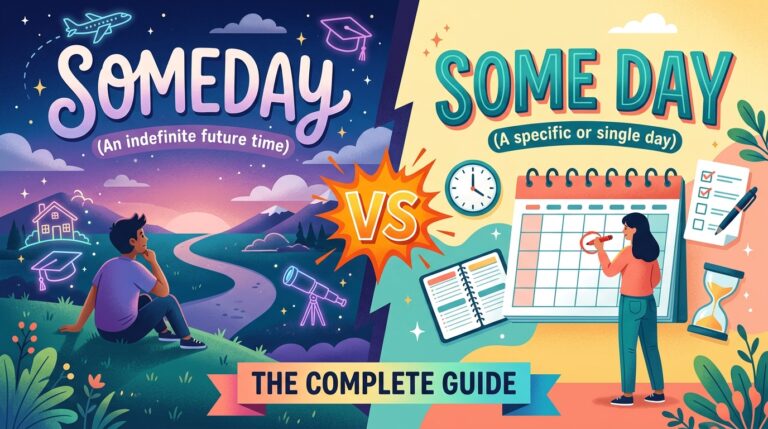
      Someday vs. Some Day: The Complete Guide

      BySarah Mitchell October 20, 2026October 20, 2026

      Quick Answer: Someday vs. Some Day Someday is one word when you mean at an unspecified time in the future. Some day is two words when you mean one particular but unspecified day, often with emphasis on the day itself or a specific day within a period. The key distinction is meaning, not simply spelling….

      Read More Someday vs. Some Day: The Complete GuideContinue

    • sounds like a plan stan
      Pronunciation & Spoken English

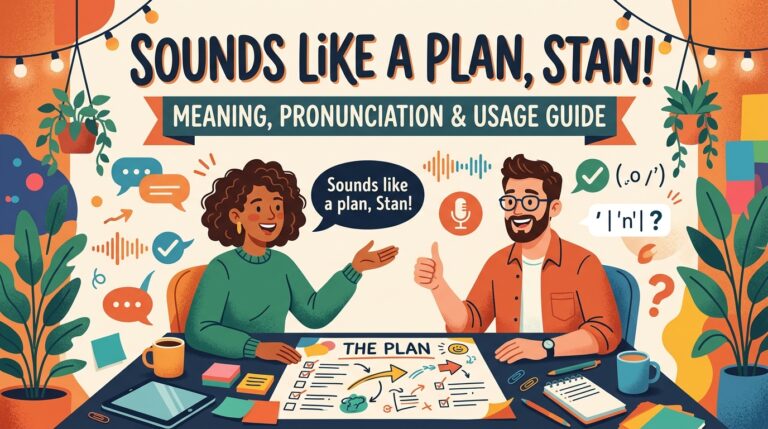
      Sounds Like a Plan, Stan: Meaning, Pronunciation, and Usage Guide

      ByOlivia Parker October 20, 2026October 20, 2026

      Quick Answer: What Does “Sounds Like a Plan, Stan” Mean? “Sounds like a plan, Stan” is a playful, rhyming expression that means “That sounds like a good idea” or “I agree with that plan.” The word Stan is used as a name to make the phrase rhyme. It is not essential to the meaning and…

      Read More Sounds Like a Plan, Stan: Meaning, Pronunciation, and Usage GuideContinue

    • what is a byproduct
      Word Meanings & Idioms

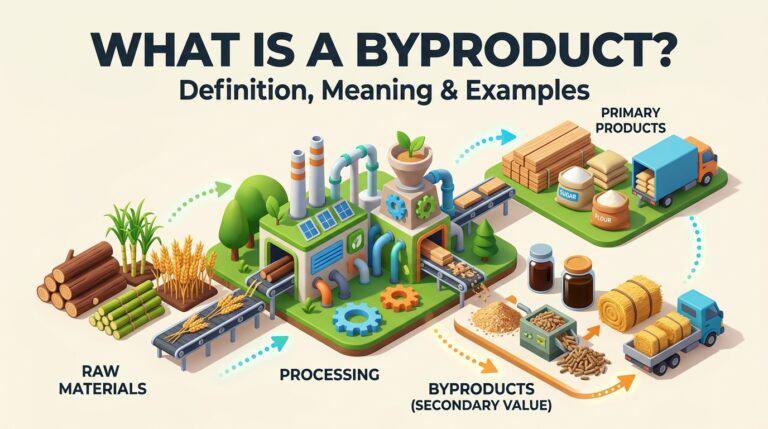
      What Is a Byproduct? Definition, Meaning, and Examples

      ByJames Wilson October 19, 2026October 19, 2026

      Quick Meaning: What Is a Byproduct? A byproduct is something produced unintentionally or incidentally while making something else or carrying out a process. It is usually secondary to the main result, but it can still be useful, valuable, or harmful. Example: Sawdust is a byproduct of cutting wood. The main purpose is to produce wooden…

      Read More What Is a Byproduct? Definition, Meaning, and ExamplesContinue

    • next friday vs this friday
      Confused Words & Word Choice

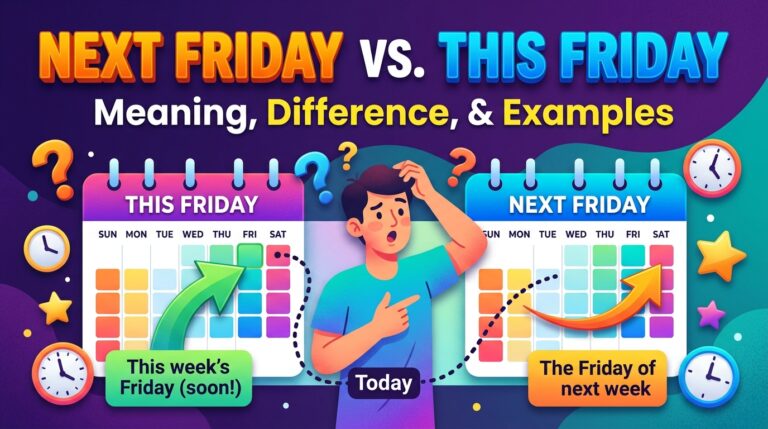
      Next Friday vs This Friday: Meaning, Difference, and Examples

      BySarah Mitchell October 19, 2026October 19, 2026

      Quick Answer “This Friday” usually means the Friday in the current week, while “next Friday” can mean either the upcoming Friday or the Friday in the following week. The exact meaning depends on the speaker, the day of the week, and the context. For example, if today is Monday, October 19, 2026: The important point…

      Read More Next Friday vs This Friday: Meaning, Difference, and ExamplesContinue

    • cancellation vs cancelation
      Confused Words & Word Choice

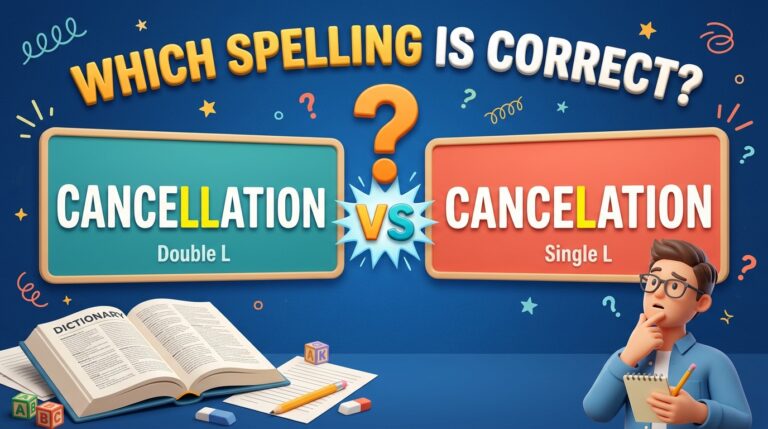
      Cancellation vs Cancelation: Which Spelling Is Correct?

      BySarah Mitchell October 19, 2026October 19, 2026

      Quick Answer Both “cancellation” and “cancelation” are correct spellings. The difference is regional preference: cancellation is the standard and overwhelmingly preferred spelling in British English and is also the usual spelling in American English. Cancelation is an accepted American English variant, but it is much less common. If you are unsure which form to use,…

      Read More Cancellation vs Cancelation: Which Spelling Is Correct?Continue

    • theater or theatre
      Confused Words & Word Choice

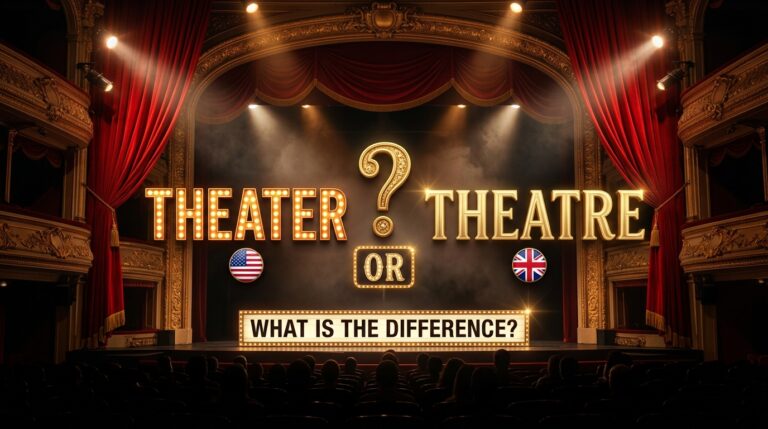
      Theater or Theatre: What Is the Difference?

      BySarah Mitchell October 19, 2026October 19, 2026

      Quick Answer Theater is the standard American English spelling, while theatre is the standard British English spelling. Both words are correct and have the same meaning: a place where plays or performances are presented, the art of dramatic performance, or a venue where films are shown. Examples: The difference is primarily regional spelling, not meaning,…

      Read More Theater or Theatre: What Is the Difference?Continue

    • aunty or auntie
      Confused Words & Word Choice

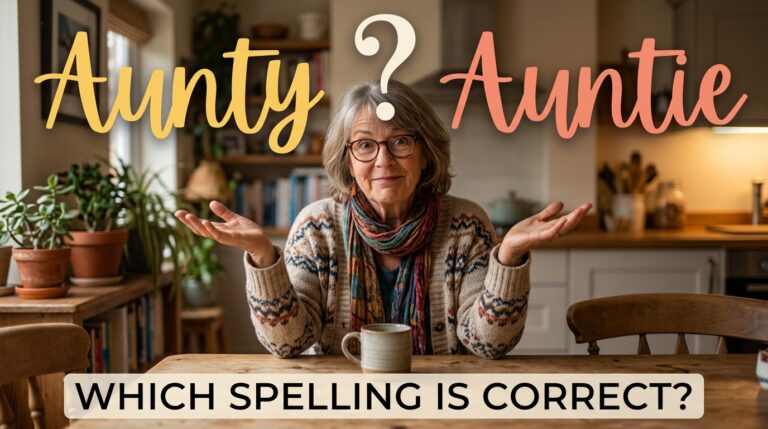
      Aunty or Auntie: Which Spelling Is Correct?

      BySarah Mitchell October 18, 2026October 18, 2026

      Quick Answer Both “aunty” and “auntie” are correct English spellings. They mean the same thing: an aunt, or a woman who is addressed affectionately as an aunt. Neither spelling is universally more correct than the other. For example, both “My aunty lives in Lahore” and “My auntie lives in Lahore” are correct. The best choice…

      Read More Aunty or Auntie: Which Spelling Is Correct?Continue

    • license vs licence
      Confused Words & Word Choice

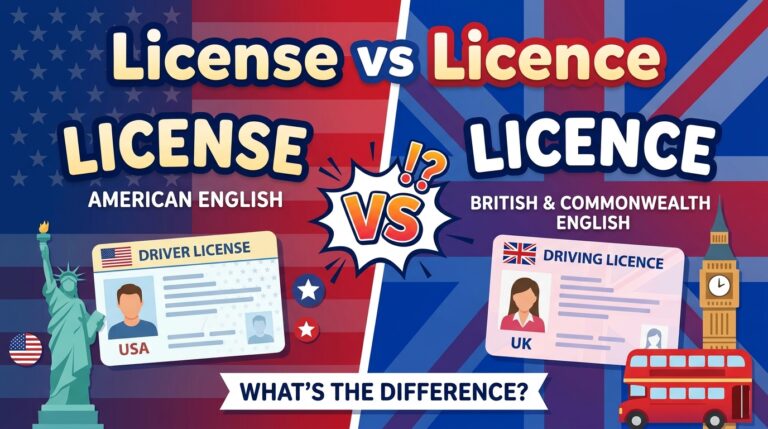
      License vs Licence: What’s the Difference?

      BySarah Mitchell October 18, 2026October 18, 2026

      Quick Answer: License vs Licence License is the correct spelling in American English for both the noun and the verb. Licence is the standard British English spelling for the noun, while license is used for the verb. The main difference between license vs licence is regional spelling and grammatical function, not meaning. Both spellings refer…

      Read More License vs Licence: What’s the Difference?Continue

    • thank you so much
      Everyday Phrases & Politeness

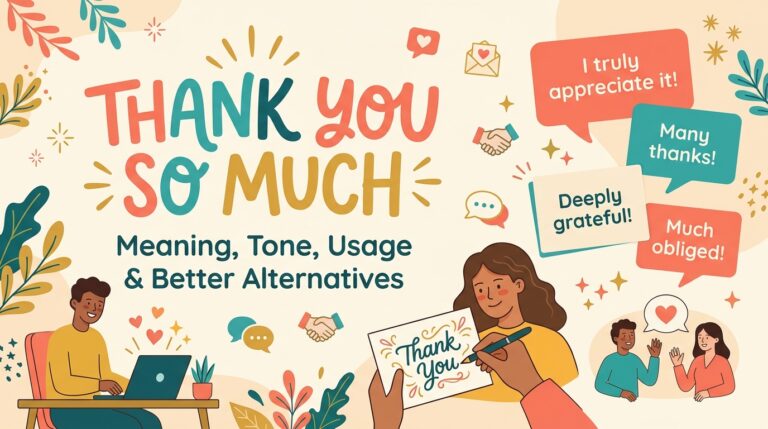
      Thank You So Much: Meaning, Tone, Usage, and Better Alternatives

      ByJames Wilson October 18, 2026October 18, 2026

      Quick Answer Yes, “thank you so much” is grammatically correct, natural, and polite in English. It expresses sincere appreciation and usually sounds warmer or more enthusiastic than a simple “thank you.” You can use it in everyday conversations, text messages, emails, workplace communication, and messages to friends, family members, teachers, or colleagues. Examples: The phrase…

      Read More Thank You So Much: Meaning, Tone, Usage, and Better AlternativesContinue

    Page navigation

    1 2 3 … 14 Next PageNext

    © 2026 Grammar Fixed - WordPress Theme by Kadence WP