Skip to content

Grammar Fixed

    Grammar Fixed
    • everything vs every thing
      Confused Words & Word Choice

      Everything vs Every Thing: Which Is Correct?

      BySarah Mitchell September 29, 2026September 29, 2026

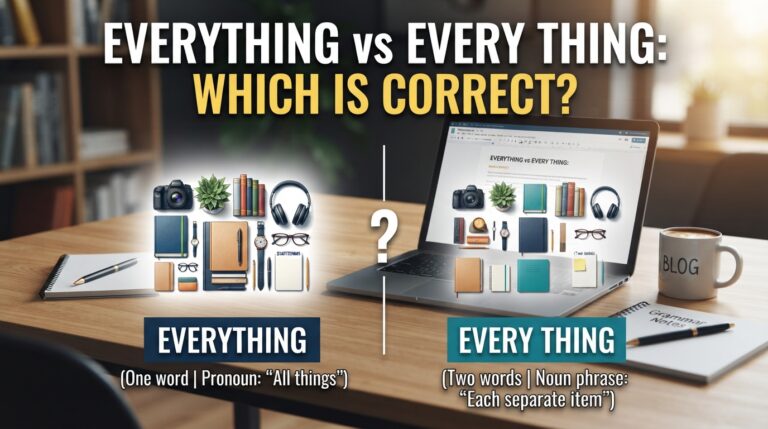
      Quick Answer Everything is the standard and correct form when you mean “all things” or “all that exists, happens, or is involved.” It is written as one word in ordinary modern English. So, if you are wondering whether to write everything or every thing, choose everything in almost all ordinary sentences. The same principle explains…
      Read More Everything vs Every Thing: Which Is Correct?Continue

    • wreckless vs reckless
      Confused Words & Word Choice

      Wreckless vs Reckless: Which Spelling Is Correct?

      BySarah Mitchell September 29, 2026September 29, 2026

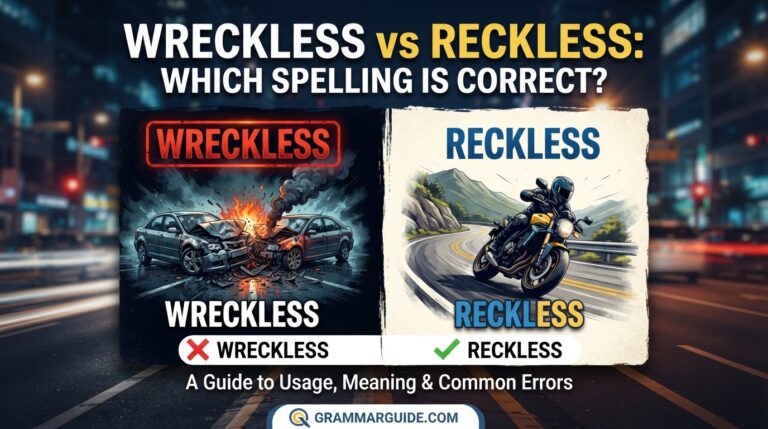
      Quick Answer Reckless is the standard and correct English word when you mean careless, dangerously unconcerned about consequences, or lacking proper caution. Wreckless is generally not a standard spelling of reckless. It is usually a misspelling caused by associating the word with wreck, meaning a damaged vehicle, object, or situation. So, if you are asking…

      Read More Wreckless vs Reckless: Which Spelling Is Correct?Continue

    • more smart vs smarter
      Confused Words & Word Choice

      More Smart vs. Smarter: Which Is Correct?

      BySarah Mitchell September 29, 2026September 29, 2026

      Quick Answer “Smarter” is the standard comparative form of “smart,” and it is usually the natural choice. So, in most situations: She is smarter than her brother. ✅ She is more smart than her brother. ⚠️ Grammatically possible in some contexts, but unnatural in ordinary modern English. She is more smarter than her brother. ❌…

      Read More More Smart vs. Smarter: Which Is Correct?Continue

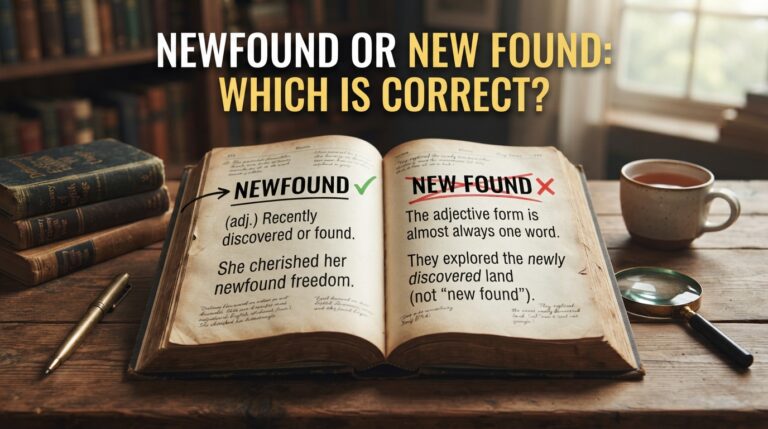
    • newfound or new found or new found
      Confused Words & Word Choice

      Newfound or New Found: Which Is Correct?

      BySarah Mitchell September 29, 2026September 29, 2026

      Quick Answer Newfound is the standard one-word spelling when you mean recently discovered, recently acquired, or newly developed. New-found is also an accepted hyphenated form, especially in some dictionaries and styles, but newfound is the simpler modern spelling. New found as two separate words is generally not the standard spelling of the adjective. If you…

      Read More Newfound or New Found: Which Is Correct?Continue

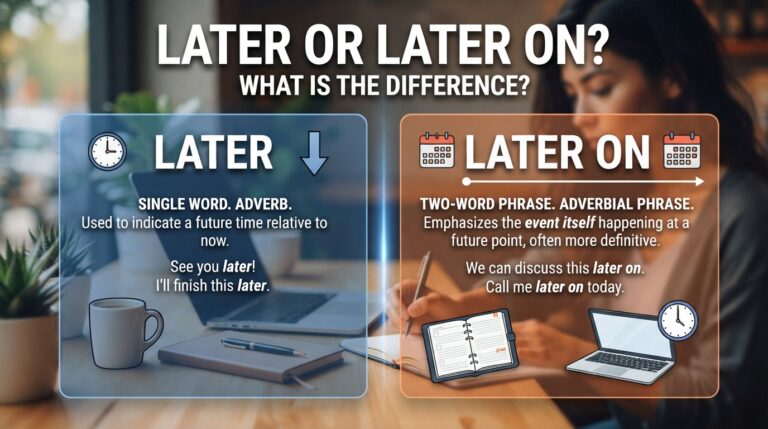
    • later or later on
      Confused Words & Word Choice

      Later or Later On: What Is the Difference?

      BySarah Mitchell September 28, 2026September 28, 2026

      Quick Answer “Later” and “later on” are both correct expressions meaning “at a time after now or after another stated time.” In most everyday situations, they can be used interchangeably: The main difference is style and emphasis, not basic meaning. Later is shorter, more flexible, and more common in both formal and informal English. Later…

      Read More Later or Later On: What Is the Difference?Continue

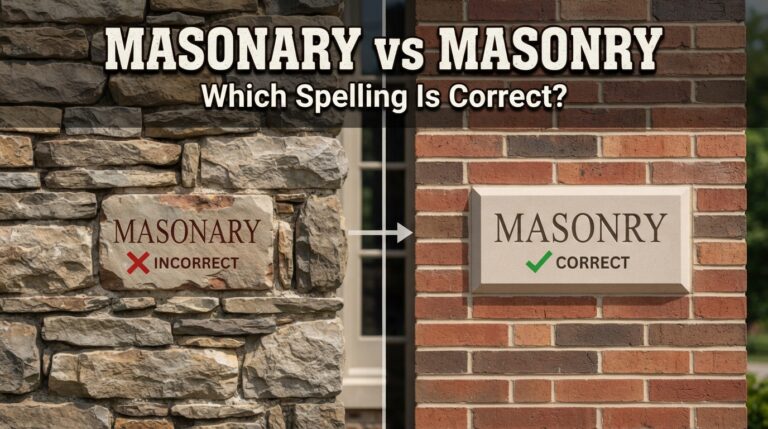
    • masonary vs masonry
      Spelling & Word Forms

      Masonary vs Masonry: Which Spelling Is Correct?

      BySarah Mitchell September 28, 2026September 28, 2026

      Quick Answer Masonry is the correct spelling. Masonary is a common misspelling and is not the standard spelling in modern English. The correct word is masonry, pronounced with the ending found in words such as primary and boundary. It refers to the craft, work, or construction of structures using materials such as brick, stone, concrete…

      Read More Masonary vs Masonry: Which Spelling Is Correct?Continue

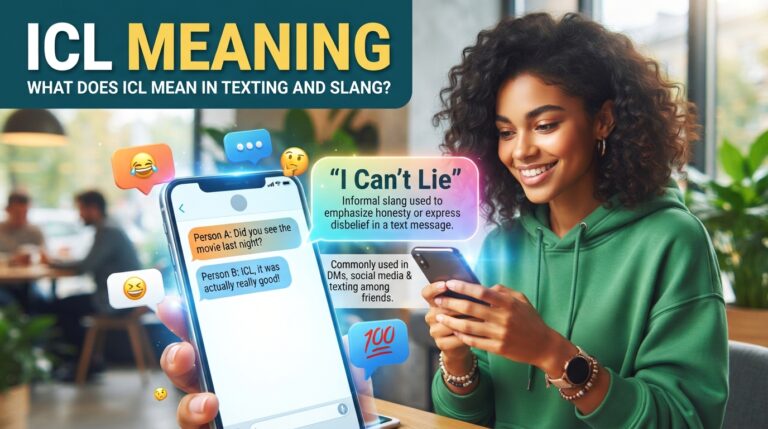
    • icl meaning
      Slang, Text & Emojis

      ICL Meaning: What Does ICL Mean in Texting and Slang?

      ByOlivia Parker September 28, 2026September 28, 2026

      Quick Meaning ICL most commonly means “I Can’t Lie” in texting and internet slang. People use it before an honest opinion, confession, reaction, or blunt statement—roughly like “honestly,” “to be honest,” or “not gonna lie.” For example, “icl, that movie was actually good” means “I can’t lie, that movie was actually good.” The lowercase form…

      Read More ICL Meaning: What Does ICL Mean in Texting and Slang?Continue

    • instructions on or instructions for
      Confused Words & Word Choice

      Instructions on or Instructions for: Which Is Correct?

      BySarah Mitchell September 28, 2026September 28, 2026

      Quick Answer Both “instructions on” and “instructions for” are grammatically correct, but they are used in different contexts. There is considerable overlap. In many sentences, especially before how to + verb, both forms are possible: instructions on how to install the printerinstructions for how to install the printer The first is generally more idiomatic in…

      Read More Instructions on or Instructions for: Which Is Correct?Continue

    • restroom vs bathroom vs washroom
      Confused Words & Word Choice

      Restroom vs Bathroom vs Washroom: What’s the Difference?

      BySarah Mitchell September 27, 2026September 27, 2026

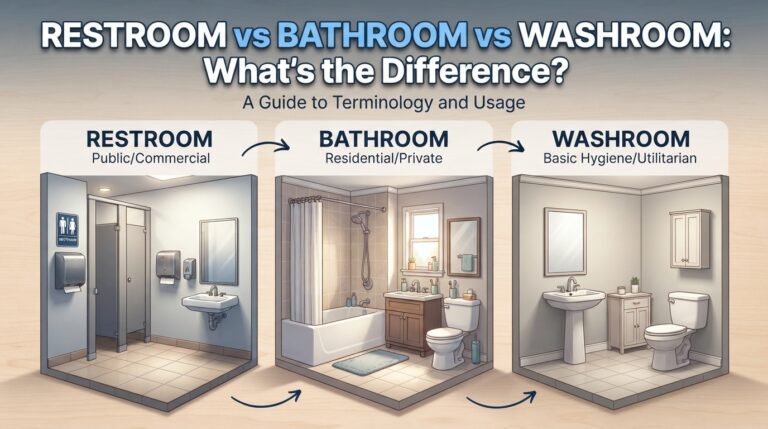
      Quick Answer Restroom, bathroom, and washroom can all refer to a room with a toilet and facilities for personal hygiene, but they differ mainly by region, context, and the features being emphasized. So, if you are talking about your home, “bathroom” is usually natural in American English and widely understood elsewhere. If you are asking…

      Read More Restroom vs Bathroom vs Washroom: What’s the Difference?Continue

    • similar to vs similarly to correct usage explained
      Confused Words & Word Choice

      Similar to vs Similarly to: Correct Usage Explained

      BySarah Mitchell September 27, 2026September 27, 2026

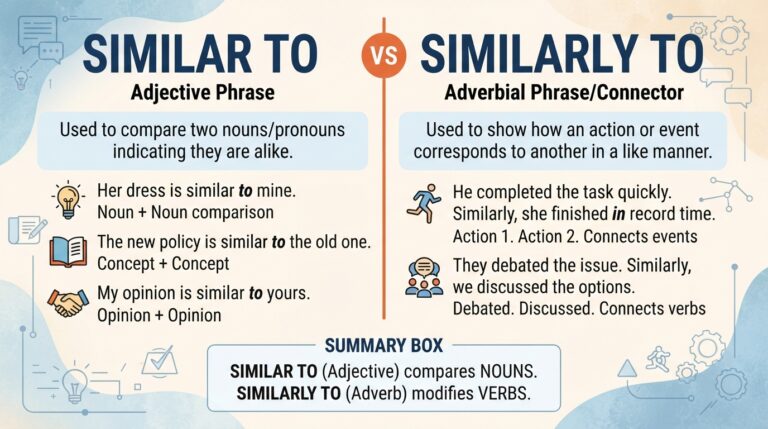
      Quick Answer “Similar to” and “similarly to” are both correct, but they do different grammatical jobs. So, if you are describing what something is like, use similar to. If you are explaining how something happens or how another statement relates to the previous one, use similarly. At-a-Glance Table Expression Part of speech Main function Typical…

      Read More Similar to vs Similarly to: Correct Usage ExplainedContinue

    Page navigation

    Previous PagePrevious 1 … 5 6 7 8 9 … 14 Next PageNext

    © 2026 Grammar Fixed - WordPress Theme by Kadence WP