Skip to content

Grammar Fixed

    Grammar Fixed
    • years of experience vs years experience
      Confused Words & Word Choice

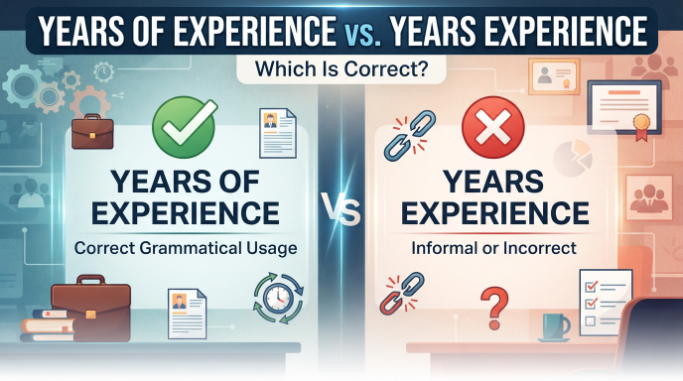
      Years of Experience vs. Years Experience: Which Is Correct?

      BySarah Mitchell September 23, 2026September 23, 2026

      Quick Answer “Years of experience” is the standard and safest form in modern English. Use years of experience when you mean that someone has accumulated experience over a particular number of years: “Years experience” without of is generally not the standard form in careful prose when experience is being used as a noun after a…
      Read More Years of Experience vs. Years Experience: Which Is Correct?Continue

    • its called vs it called
      Confused Words & Word Choice

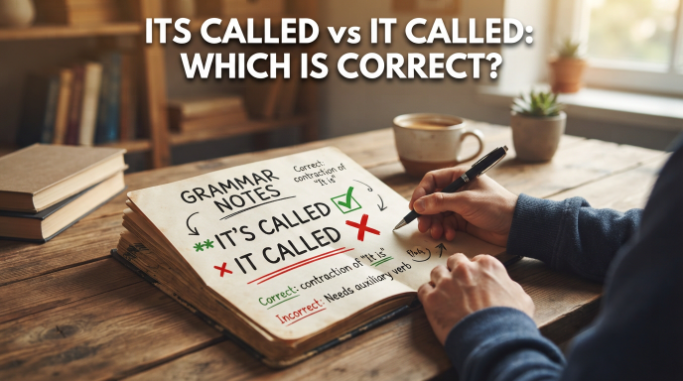
      Its Called vs It Called: Which Is Correct?

      BySarah Mitchell September 23, 2026September 23, 2026

      Quick Answer “It’s called” is correct when you mean “it is called.” For example: The easiest test is to replace it’s with it is. If the sentence still makes sense, it’s is the right form. At-a-Glance Table Form What it means Grammar Example Correct for “it is called”? it’s called it is called contraction +…

      Read More Its Called vs It Called: Which Is Correct?Continue

    • ninety or ninty
      Spelling & Word Forms

      Ninety or Ninty: Which Spelling Is Correct?

      BySarah Mitchell September 23, 2026September 23, 2026

      Quick Answer The correct spelling is ninety. Ninty is an incorrect spelling in standard modern English. If you are writing the number 90 in words, use ninety, not ninty. So, if you are wondering ninety or ninty which is correct, the answer is ninety. The spelling can seem confusing because ninety does not follow the…

      Read More Ninety or Ninty: Which Spelling Is Correct?Continue

    • led vs lead
      Confused Words & Word Choice

      Led vs Lead: What Is the Difference?

      BySarah Mitchell September 23, 2026September 23, 2026

      Quick Answer Led and lead are both correct English words, but they are used differently. So: Today, she leads the team.Yesterday, she led the team. And: The pipes contain lead. The most important point is pronunciation: the verb lead is pronounced like “leed,” while its past tense led is pronounced like “red” with an L….

      Read More Led vs Lead: What Is the Difference?Continue

    • paucity meaning
      Word Meanings & Idioms

      Paucity Meaning: Definition, Usage, Synonyms, and Examples

      ByJames Wilson September 22, 2026September 22, 2026

      Quick Meaning Paucity means a very small amount or number of something, especially when there is less than is needed or expected. In simple English, paucity = scarcity, shortage, or not enough of something. For example: The paucity of reliable information made the decision difficult. Here, paucity means there was too little reliable information. Paucity…

      Read More Paucity Meaning: Definition, Usage, Synonyms, and ExamplesContinue

    • inside of vs inside
      Confused Words & Word Choice

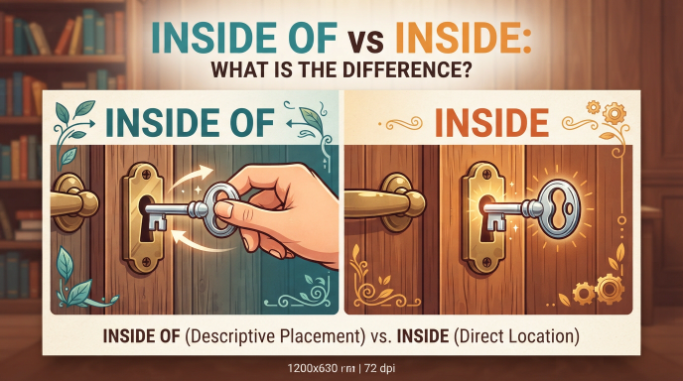
      Inside Of vs Inside: What Is the Difference?

      BySarah Mitchell September 22, 2026September 22, 2026

      Quick Answer Inside and inside of can both mean “in the interior of something,” and in many sentences they are interchangeable: However, inside is generally the more concise and neutral choice, especially in formal writing. Inside of is more common in conversational American English and can sound more wordy in contexts where inside works perfectly…

      Read More Inside Of vs Inside: What Is the Difference?Continue

    • aswell or as well
      Confused Words & Word Choice

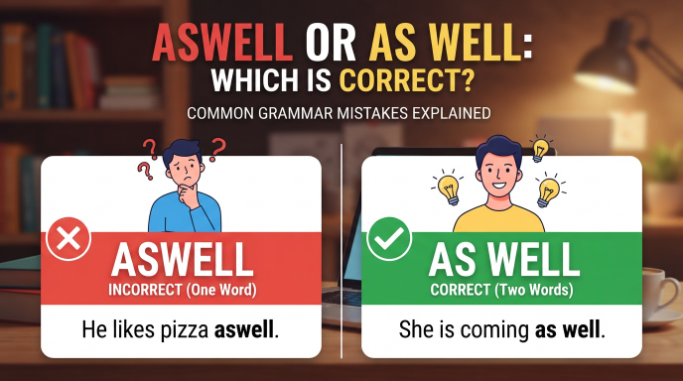
      Aswell or As Well: Which Is Correct?

      BySarah Mitchell September 22, 2026September 22, 2026

      Quick Answer As well is the correct spelling in standard English. It is written as two separate words. Aswell is not the standard spelling of the phrase and should generally be treated as a spelling error. This is true in both British English and American English. Use as well when you mean “also,” “too,” or…

      Read More Aswell or As Well: Which Is Correct?Continue

    • follow up or followup
      Confused Words & Word Choice

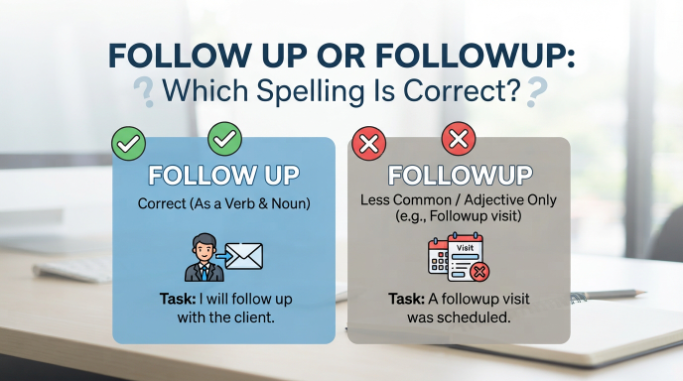
      Follow Up or Followup: Which Spelling Is Correct?

      BySarah Mitchell September 22, 2026September 22, 2026

      Quick Answer “Follow up” is two words when it functions as a verb. “Follow-up” is hyphenated when it functions as a noun or adjective. “Followup” as one word is generally not the standard form in edited English. So: The hyphen is therefore not simply a matter of personal spelling preference. It helps distinguish the verb…

      Read More Follow Up or Followup: Which Spelling Is Correct?Continue

    • what is verbiage
      Word Meanings & Idioms

      What Is Verbiage? Meaning, Definition, Usage, and Examples

      ByJames Wilson September 21, 2026September 21, 2026

      Quick Meaning Verbiage means the words used to express something, especially when there are more words than necessary. It can refer neutrally to the wording of a text or speech, but it often carries a slightly negative sense of wordiness or unnecessarily complicated language. So, if someone says, “The contract contains a lot of legal…

      Read More What Is Verbiage? Meaning, Definition, Usage, and ExamplesContinue

    • different vs differently
      Confused Words & Word Choice

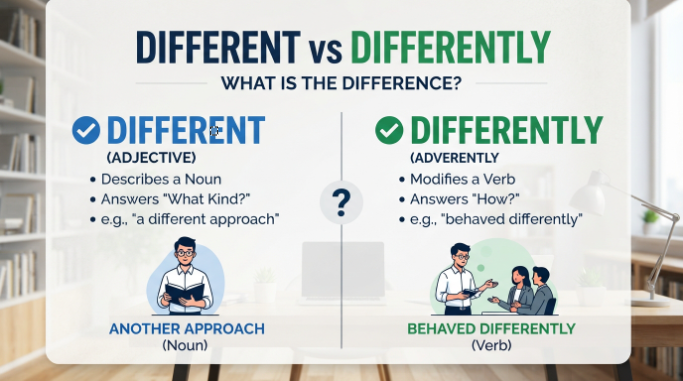
      Different vs Differently: What Is the Difference?

      BySarah Mitchell September 21, 2026September 21, 2026

      Quick Answer Different and differently are both correct English words, but they perform different grammatical jobs. Compare these sentences: Your approach is different. Here, different describes the noun approach, so an adjective is needed. You approach the problem differently. Here, differently describes the verb approach, explaining how the action is performed. A quick test is…

      Read More Different vs Differently: What Is the Difference?Continue

    Page navigation

    Previous PagePrevious 1 … 7 8 9 10 11 … 14 Next PageNext

    © 2026 Grammar Fixed - WordPress Theme by Kadence WP