Skip to content

Grammar Fixed

    Grammar Fixed
    • i digress meaning
      Word Meanings & Idioms

      I Digress Meaning: Definition, Usage, Pronunciation, and Examples

      ByJames Wilson September 27, 2026September 27, 2026

      Quick Meaning “I digress” means “I have moved away from the main topic” or “I have started talking about something unrelated, so let me return to the original point.” It is most commonly used after a speaker or writer has gone off-topic, especially when the side comment is noticeable but not necessarily a serious problem….

      Read More I Digress Meaning: Definition, Usage, Pronunciation, and ExamplesContinue

    • vender or vendor
      Confused Words & Word Choice

      Vender or Vendor: Which Spelling Is Correct?

      BySarah Mitchell September 27, 2026September 27, 2026

      Quick Answer Vendor is the standard English spelling for a person or business that sells goods or services. Vender is also a real English word, but it is much less common. It means essentially the same thing: a person or business that sells something. In modern standard usage, vendor is overwhelmingly the more common and…

      Read More Vender or Vendor: Which Spelling Is Correct?Continue

    • breath vs breathe
      Confused Words & Word Choice

      Breath vs Breathe: What Is the Difference?

      BySarah Mitchell September 26, 2026September 26, 2026

      Quick Answer Breath and breathe are closely related but grammatically different words: The simplest rule is: You take a breath, but you breathe. Examples: The spelling difference is small, but the pronunciation is also different. Breath has the short vowel sound /ɛ/, as in bed, while breathe has the long vowel sound /iː/, as in…

      Read More Breath vs Breathe: What Is the Difference?Continue

    • leafs or leaves
      Confused Words & Word Choice

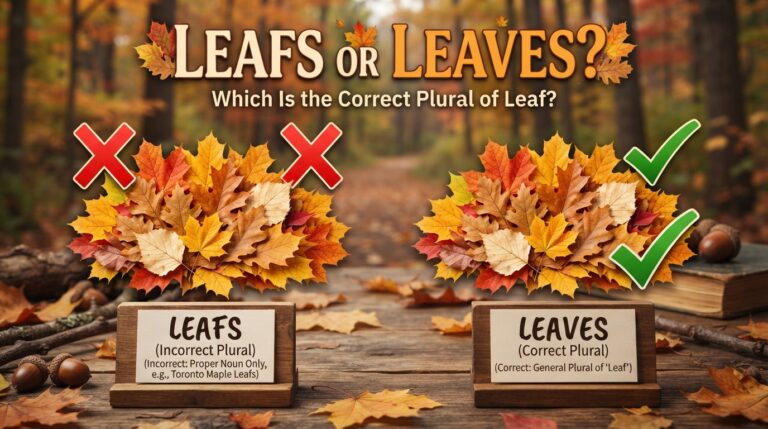
      Leafs or Leaves: Which Is the Correct Plural of Leaf?

      BySarah Mitchell September 26, 2026September 26, 2026

      Quick Answer The standard plural of leaf is leaves. Leafs is not normally the plural of the noun leaf. However, leafs can be correct as the third-person singular present-tense form of the verb leaf, meaning “to turn or separate into leaves,” and it also appears in some proper names, such as the sports team name…

      Read More Leafs or Leaves: Which Is the Correct Plural of Leaf?Continue

    • disoriented vs disorientated
      Confused Words & Word Choice

      Disoriented vs Disorientated: Which Is Correct?

      BySarah Mitchell September 26, 2026September 26, 2026

      Quick Answer Disoriented and disorientated are both standard English words. They have essentially the same meaning: confused, unable to understand where you are, or uncertain about what is happening or how to proceed. The main difference is regional usage: So, if you are wondering “disoriented or disorientated?”, the answer depends largely on your variety of…

      Read More Disoriented vs Disorientated: Which Is Correct?Continue

    • myf meaning
      Slang, Text & Emojis

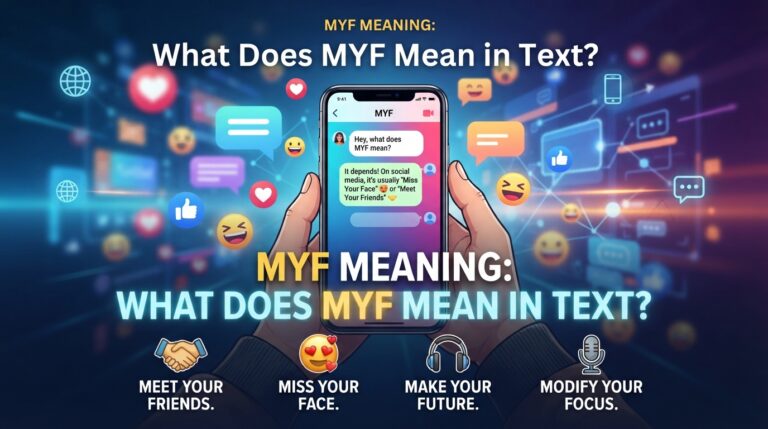
      MYF Meaning: What Does MYF Mean in Text?

      ByOlivia Parker September 26, 2026September 26, 2026

      Quick Meaning MYF does not have one universal meaning in texting. Its meaning depends heavily on the conversation and the community using it. In some chats, MYF may be an abbreviation created from a phrase or personal shorthand, while in other contexts it can represent a username, initials, or a community-specific expression. Because MYF is…

      Read More MYF Meaning: What Does MYF Mean in Text?Continue

    • dialog vs dialogue
      Confused Words & Word Choice

      Dialog vs Dialogue: What Is the Difference?

      BySarah Mitchell September 24, 2026September 24, 2026

      Quick Answer Dialog and dialogue are both correct spellings, but they are not equally common in every context. So, if you are asking “Is it dialog or dialogue?”, the answer depends on context. Neither spelling is universally wrong. At-a-Glance Table Feature Dialog Dialogue Basic meaning Conversation or exchange of ideas; also a software interface element…

      Read More Dialog vs Dialogue: What Is the Difference?Continue

    • cacoon or cocoon
      Confused Words & Word Choice

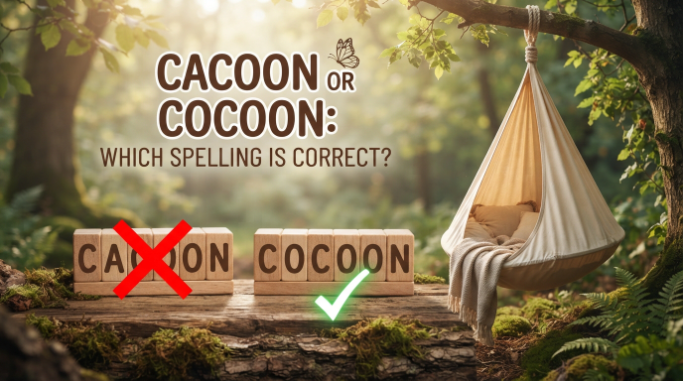
      Cacoon or Cocoon: Which Spelling Is Correct?

      BySarah Mitchell September 24, 2026September 24, 2026

      Quick Answer The correct English spelling is cocoon, not cacoon. If you are asking how to spell the protective covering made by certain insect larvae, write cocoon. The plural is cocoons, and the related forms are cocooned and cocooning. Cacoon is not the standard English spelling of this word. Likewise, concoon and cocon are not…

      Read More Cacoon or Cocoon: Which Spelling Is Correct?Continue

    • ask a question vs pose a question
      Confused Words & Word Choice

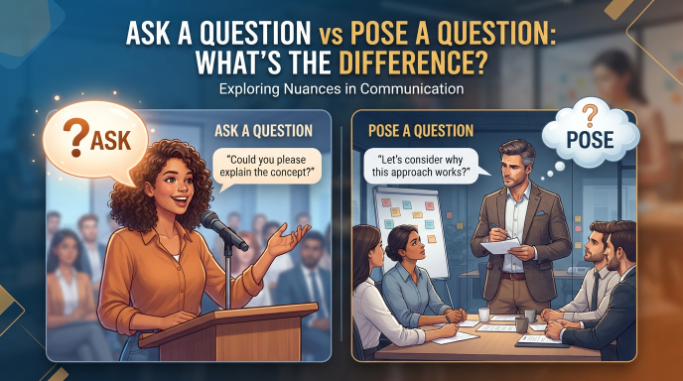
      Ask a Question vs Pose a Question: What’s the Difference?

      BySarah Mitchell September 24, 2026September 24, 2026

      Quick Answer “Ask a question” and “pose a question” are both correct, and they usually mean the same basic thing: to put a question into words and seek an answer. The main difference is register and emphasis: So, in most casual situations, choose ask a question. In formal or analytical writing, pose a question may…

      Read More Ask a Question vs Pose a Question: What’s the Difference?Continue

    • bear with me or bare with me
      Confused Words & Word Choice

      Bear With Me or Bare With Me? The Correct Spelling and Meaning

      BySarah Mitchell September 24, 2026September 24, 2026

      If you are asking someone to be patient, the correct phrase is “bear with me.” “Bare with me” is usually a spelling mistake in this context. Please bear with me while I check the details. ✓ Here, bear means to tolerate, endure, or be patient with something. Bare, on the other hand, means uncovered or…

      Read More Bear With Me or Bare With Me? The Correct Spelling and MeaningContinue

    Page navigation

    Previous PagePrevious 1 … 6 7 8 9 10 … 14 Next PageNext

    © 2026 Grammar Fixed - WordPress Theme by Kadence WP